Establishing Last-Seen timestamps (LST) in sub-surface searches
In open-water rescue, time is the single most critical variable dictating patient outcomes. As established by the International Liaison Committee on Resuscitation (ILCOR), submersion duration is the primary prognostic indicator for survival and favorable neurological outcomes.
Last Seen Timestamping
Because a sub-surface victim's chance of functional survival drops precipitously after 10 minutes, ocean lifesavers cannot rely on guesswork.
Because a sub-surface victim's chance of functional survival drops precipitously after 10 minutes, ocean lifesavers cannot rely on guesswork.
Establishing an accurate "Last Seen" Timestamp (LST) is not a post-incident administrative chore; it is an active, high-stakes operational necessity that determines resource deployment, rescue-to-recovery shifts, and rescuer safety profiles.
Why the Timestamp Dictates the RESCUE
An accurate LST serves as the operational anchor for an entire multi-agency response. Without it, incident leaders face "timeline drift"—a psychological phenomenon where adrenaline causes rescuers to overestimate or underestimate elapsed time.
1. Hard-Stopping the Survival Window
Submersion intervals under 10 minutes are strongly associated with highly favorable neurological survival. Conversely, intervals exceeding 25 minutes yield an exceptionally low probability of positive clinical outcomes. An exact timestamp draws a line in the sand, allowing incident commanders to make objective, data-driven decisions rather than emotional ones.
2. Strategic Rescuer Risk Management
Ocean rescues often require public safety divers and lifeguards to operate in hazardous conditions, including heavy surf, rip currents, and zero visibility. Risking rescuer lives for a high-probability rescue mission is warranted; risking rescuer lives for a low-probability recovery due to an extended submersion window is a tragic operational error. The LST provides the objective justification required to downgrade response risk profiles.
3. Calculating the Drift Vector
Ocean environments are dynamic. Longshore currents, rip currents, and tidal shifts move sub-surface objects constantly. By combining an exact LST with known local current speeds (e.g., a 2-knot longshore drift), search coordinators can utilize a precise mathematical formula to establish the Probability Area:
Distance Deterioration = Current Speed X Elapsed Time (since LST)
The Practical "How": Tactical Protocol for Lifeguards
When a missing swimmer report is received, the tower lifeguard or responding unit must execute a dual-track protocol: establishing the physical location and locking down the temporal data.
Step-by-Step Tactical Implementation
1. Lock the Initial Time: Immediate.
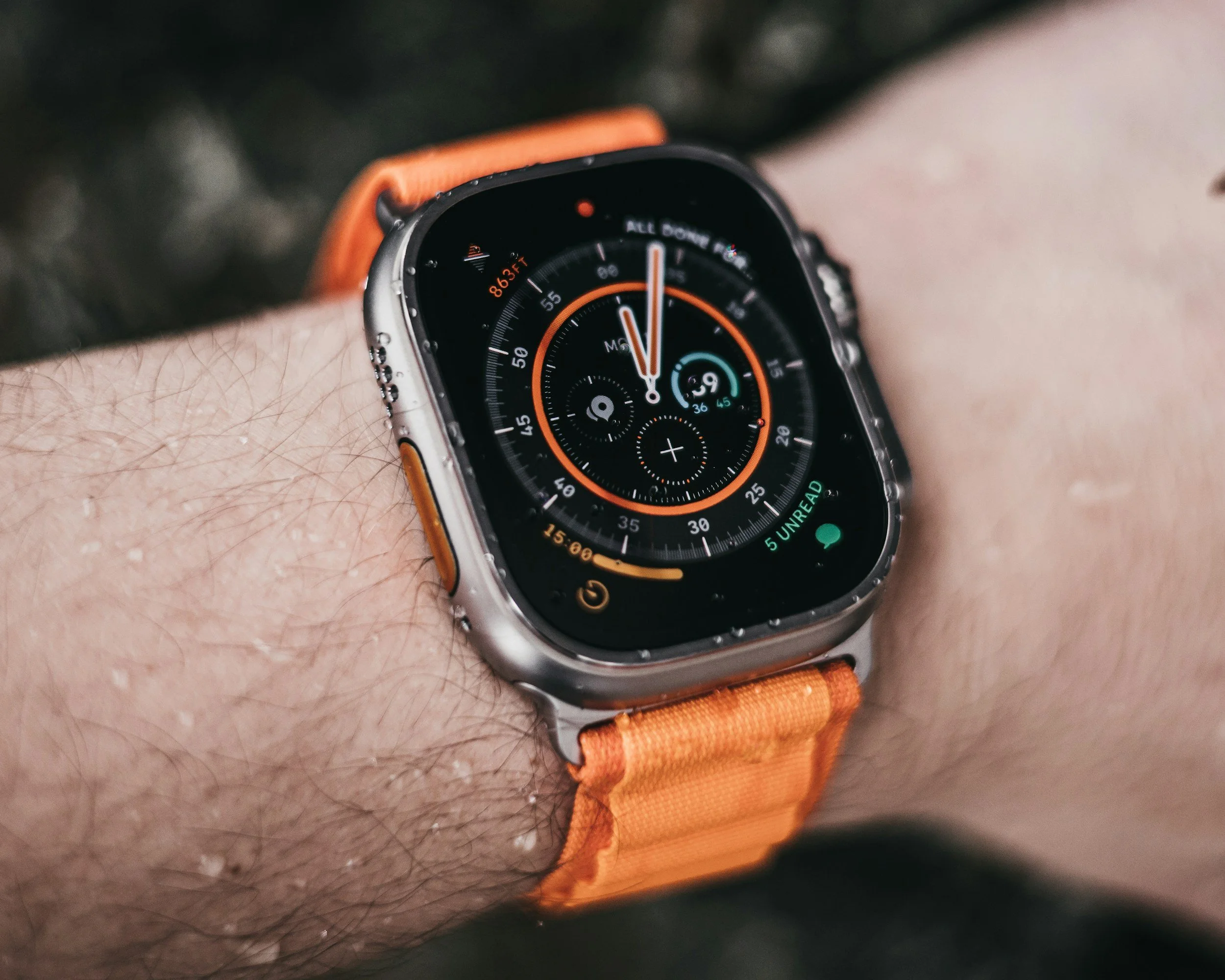
The absolute moment a reporting party (RP) states a swimmer is missing or submerged, hit the lap button on your watch, radio dispatch to log the time, or check your phone. Record (and remember) this as the "Reporting Time."
2. Fix the Visual Anchor: Within 60 Seconds.
Do not let the reporting party move. Stand exactly where they were standing when they last saw the victim. Have them point their arm directly at the spot. Identify a fixed background object (e.g., a specific pier piling, street sign, buoy, or horizon marker) in line with their arm to create a rigid visual bearing.
3. Interrogate for Temporal Back-Tracking: Within 2 Minutes.
Determine the delta between the actual submersion and the report. Ask specific, anchoring questions to reverse-engineer the exact LST:
“Did it happen just now, or have you been looking for them?”
“What text message did you just send before this happened?”
Cross-reference the RP’s phone log if they called a family member or 911 immediately.
4. Broadcast the Operational Data:Within 3 Minutes.
Transmit the verified LST and coordinates to all responding units.
Example: "Tower 2 to Headquarters, we have a confirmed Last Seen Timestamp of 14:02, missing 8-year-old male, visual bearing aligned with 14th Street jetty, estimated 5 minutes elapsed."
Trust the Last Seen Timestamp
While rare exceptions of survival exist beyond the 25-minute mark—predominantly involving pediatric submersions in ice-choked water (<40 degrees Farenheit) —standard coastal ocean temperatures do not support these anomalies.
Trust the timestamp over optimism.
Never guess the time: Adrenaline alters your internal clock. Look at a digital readout and record it immediately.
Anchor the informant: Keep the witness in place. Moving them changes the angle of perspective and ruins the visual grid.
Update incoming assets with the exact clock time: Do not say "about five minutes ago." Say, "Last seen at 10:14." This allows all agencies (Police, Fire, Coast Guard) to synchronize their operational countdowns seamlessly.